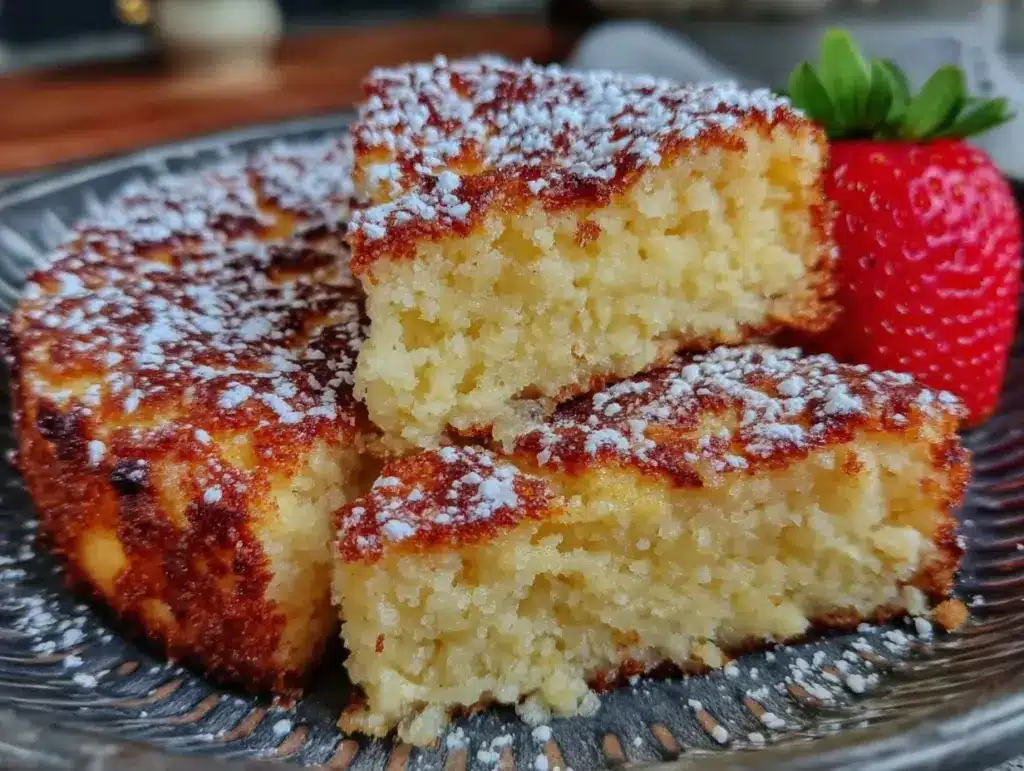
There’s something magical about the aroma of a freshly baked French butter cake wafting through your kitchen. Rich, buttery, and melt-in-your-mouth delicious, this cake is the epitome of indulgence. The first time I made this recipe, I was transported straight to a cozy café in Paris. With its golden crust and tender crumb, this French butter cake is not just a dessert—it’s an experience. Whether you’re hosting a dinner party or simply treating yourself, this recipe will have you coming back for more.
If you’ve ever hesitated to make a French butter cake thinking it’s too complicated, let me reassure you: this recipe is surprisingly straightforward. You’ll be amazed at how simple it is to create something so elegant and decadent. So grab your apron, preheat your oven, and let’s dive into the magic of baking the perfect French butter cake—you won’t regret it!
Why You’ll Love This Recipe
- Simple and Easy: Despite its luxurious taste, this French butter cake comes together quickly with basic ingredients and straightforward steps.
- Perfect Texture: The cake achieves the ideal balance of moist and airy, with a delicate crumb that melts in your mouth.
- Classic French Flavor: This recipe captures the essence of French baking with its rich buttery taste and subtle sweetness.
- Versatile Delight: Serve it plain, with a dusting of powdered sugar, or pair it with fresh berries and whipped cream for an elegant dessert.
- Impressive Yet Unpretentious: Your guests will think you spent hours baking, but only you’ll know how easy it was!
What sets this recipe apart is its simplicity. There are no fancy techniques or hard-to-find ingredients—just the basics done exceptionally well. It’s the kind of cake that makes you feel like a pastry chef in your own kitchen, without the stress. Trust me, once you try this recipe, it will become a go-to dessert for any occasion.
What Ingredients You Will Need
This French butter cake recipe uses humble, pantry-friendly ingredients to create something truly magical. Each component plays an important role in achieving the perfect flavor and texture.
- All-purpose flour: The base of the cake that provides structure. For a lighter texture, sift the flour before using.
- Baking powder: Helps the cake rise and creates a tender crumb.
- Salt: Enhances the flavors and balances the sweetness.
- Unsalted butter, softened: The star of the show! Use high-quality butter for a rich, authentic taste.
- Granulated sugar: Sweetens the cake and gives it a delicate crust.
- Eggs, room temperature: Adds moisture and structure to the cake. Room temperature eggs blend better with the butter and ensure a smoother batter.
- Vanilla extract: For that classic, aromatic flavor that pairs beautifully with the butter.
- Whole milk, room temperature: Adds moisture and helps create a silky texture.
Optional: Add a pinch of nutmeg or almond extract for a unique twist. If you’re feeling adventurous, you can top your cake with sliced almonds or a sprinkle of coarse sugar before baking for extra texture.
Equipment Needed
You don’t need a fancy setup to bake this French butter cake, but having the right tools will make the process much smoother.
- Mixing bowls: Use at least two—one for dry ingredients and one for wet.
- Electric mixer: A stand mixer or handheld mixer to cream the butter and sugar to perfection.
- Rubber spatula: For folding in ingredients and scraping down the sides of your mixing bowl.
- Measuring cups and spoons: Precision matters for baking—don’t eyeball these measurements!
- 9-inch round cake pan: The standard size for this recipe. Be sure to grease it well or line it with parchment paper.
- Cooling rack: To allow your cake to cool evenly without getting soggy on the bottom.
If you don’t have a round cake pan, a square one works fine too—just adjust the baking time slightly. And while a mixer makes things easier, you can use a wooden spoon and elbow grease if needed!
Preparation Method
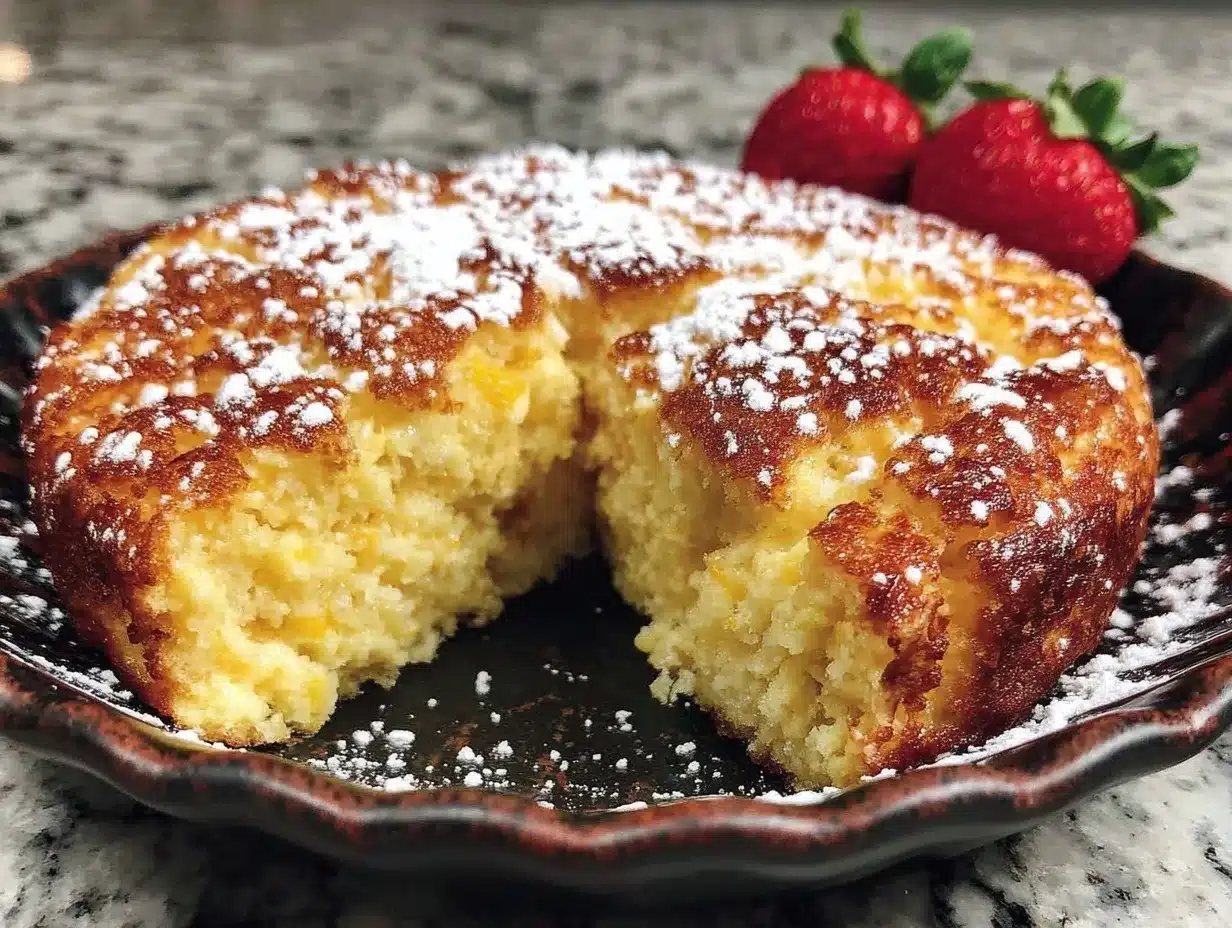
- Preheat the oven: Set your oven to 350°F (175°C) and grease a 9-inch round cake pan with butter or line it with parchment paper.
- Mix dry ingredients: In a medium bowl, sift together 1 1/2 cups (190g) of all-purpose flour, 1 teaspoon baking powder, and 1/4 teaspoon salt. Set aside.
- Cream butter and sugar: In a large mixing bowl, use an electric mixer to beat 1 cup (227g) of softened unsalted butter with 1 cup (200g) granulated sugar until light and fluffy, about 2-3 minutes.
- Add eggs: Beat in 3 room-temperature eggs one at a time, ensuring each is fully incorporated before adding the next. Scrape down the sides of the bowl as needed.
- Incorporate vanilla: Mix in 2 teaspoons of vanilla extract for a fragrant, buttery base.
- Alternate dry ingredients and milk: Reduce mixer speed to low and gradually add the dry ingredients in three batches, alternating with 1/4 cup (60ml) of room-temperature whole milk. Begin and end with the dry ingredients.
- Pour batter: Transfer the batter to the prepared cake pan and smooth the top with a spatula.
- Bake: Place the pan in the oven and bake for 30-35 minutes, or until a toothpick inserted into the center comes out clean. The top should be golden brown.
- Cool: Remove the cake from the oven and let it cool in the pan for 10 minutes before transferring it to a cooling rack.
- Serve: Dust with powdered sugar or serve plain. Enjoy your perfect French butter cake!
Cooking Tips & Techniques
- Room temperature ingredients: Always use room-temperature eggs and milk to ensure a smooth batter. Cold ingredients can cause the butter to clump.
- Don’t overmix: Overmixing can lead to a dense cake. Mix just until the ingredients are combined.
- Check doneness: Use a toothpick to test the center of the cake. If it comes out clean, your cake is ready.
- Grease thoroughly: To avoid sticking, ensure your pan is well-greased or lined with parchment paper.
- Cool completely: Let your cake cool fully on a wire rack before slicing to maintain its texture.
Variations & Adaptations
- Gluten-free option: Replace all-purpose flour with a gluten-free baking mix. Ensure it’s one designed for 1:1 substitution.
- Seasonal twist: Add citrus zest (like lemon or orange) to the batter for a fresh, zesty flavor—perfect for spring and summer.
- Chocolate version: Mix in 1/3 cup (40g) cocoa powder to create a chocolate butter cake. Reduce the flour slightly to balance the dry ingredients.
- Nutty crunch: Sprinkle chopped nuts, such as almonds or walnuts, on top of the batter before baking for added texture.
- Dairy-free adaptation: Use plant-based butter and almond milk to make the recipe dairy-free.
My favorite variation? Adding a thin layer of apricot jam as a glaze once the cake has cooled—it’s a simple touch that makes the cake even more irresistible!
Serving & Storage Suggestions
This French butter cake is best served slightly warm or at room temperature. It pairs beautifully with:
- A dollop of whipped cream
- Fresh berries like strawberries, raspberries, or blueberries
- A drizzle of chocolate or caramel sauce
To store your cake, wrap it tightly in plastic wrap or place it in an airtight container. It will keep at room temperature for up to 3 days or in the refrigerator for up to a week. For longer storage, slice the cake, wrap individual portions in plastic wrap, and freeze for up to 2 months. To enjoy again, simply thaw at room temperature or reheat slices gently in the oven.
Nutritional Information & Benefits
The French butter cake is a rich dessert, but indulgence can be part of a balanced diet. Here’s what you’ll find in one slice (based on 10 servings):
- Calories: Approximately 280
- Fat: 15g (mostly from butter)
- Carbohydrates: 34g
- Protein: 4g
Butter provides healthy fats and a rich flavor, while eggs contribute protein and essential nutrients. If you’re looking for a treat that feels decadent yet simple, this cake is perfect!
Conclusion
The perfect French butter cake is a celebration of simplicity, elegance, and flavor. Whether you’re baking for yourself or sharing with loved ones, this recipe is guaranteed to impress. I love how it brings a taste of France into my kitchen, making even the most ordinary day feel special.
Ready to give it a try? Let me know how your cake turns out in the comments below—I’d love to hear your variations or any tips you discover along the way. Don’t forget to share this recipe with friends who love baking, and enjoy every buttery bite!
Happy baking!
FAQs
Can I use salted butter?
Yes, you can use salted butter, but reduce the added salt in the recipe to avoid overpowering the flavor.
Can I use a different type of sugar?
Granulated sugar works best for this recipe, but you can try using light brown sugar for a slightly caramelized flavor.
Is it possible to make a smaller cake?
Absolutely! You can halve the recipe and use a smaller cake pan. Adjust the baking time and keep an eye on the cake to avoid overbaking.
Can I freeze this cake?
Yes! Wrap the cake or individual slices tightly in plastic wrap and store in the freezer for up to 2 months. Thaw at room temperature before serving.
What can I serve with this cake?
Fresh fruit, whipped cream, or a drizzle of chocolate sauce pair beautifully with French butter cake.
Pin This Recipe!
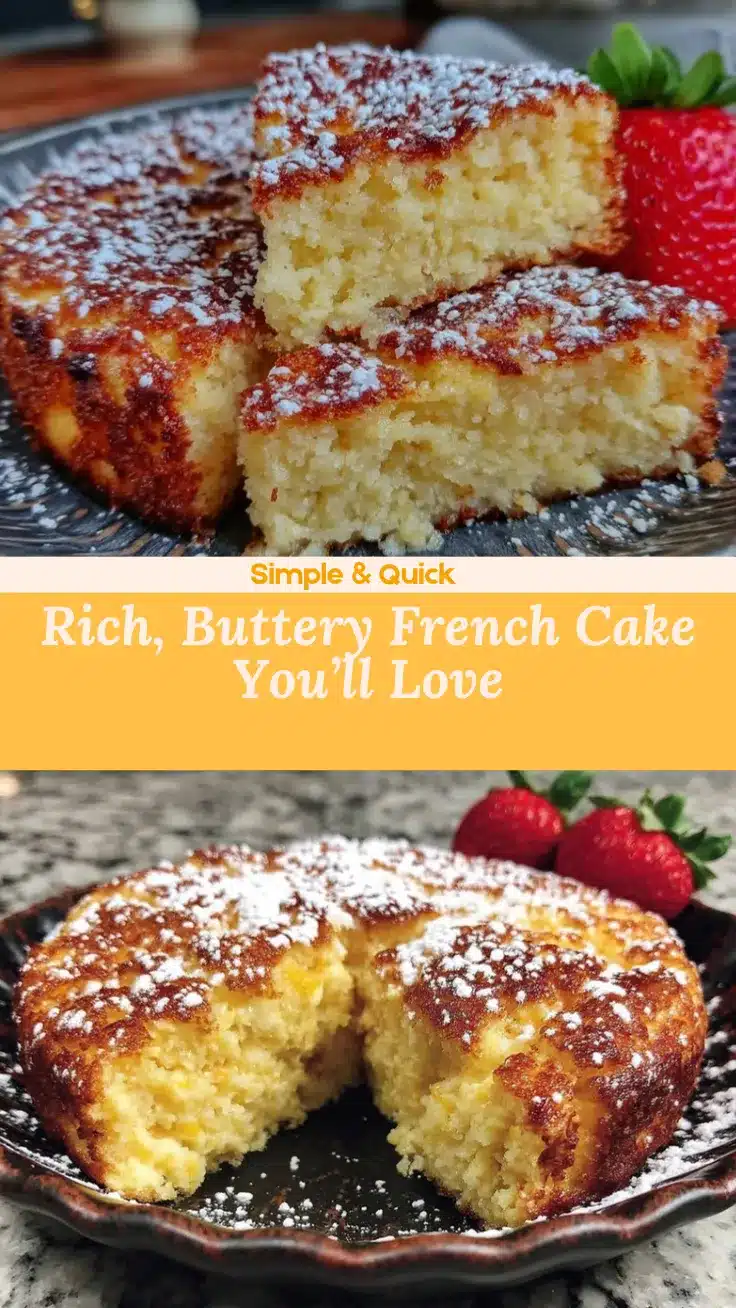
Perfect French Butter Cake Recipe Easy Steps to Bake
Rich, buttery, and melt-in-your-mouth delicious, this French butter cake is the epitome of indulgence and simplicity, perfect for any occasion.
- Prep Time: 15 minutes
- Cook Time: 35 minutes
- Total Time: 50 minutes
- Yield: 10 servings 1x
- Category: Dessert
- Cuisine: French
Ingredients
- 1 1/2 cups (190g) all-purpose flour, sifted
- 1 teaspoon baking powder
- 1/4 teaspoon salt
- 1 cup (227g) unsalted butter, softened
- 1 cup (200g) granulated sugar
- 3 eggs, room temperature
- 2 teaspoons vanilla extract
- 1/4 cup (60ml) whole milk, room temperature
Instructions
- Preheat the oven to 350°F (175°C) and grease a 9-inch round cake pan with butter or line it with parchment paper.
- In a medium bowl, sift together all-purpose flour, baking powder, and salt. Set aside.
- In a large mixing bowl, use an electric mixer to beat softened unsalted butter with granulated sugar until light and fluffy, about 2-3 minutes.
- Beat in eggs one at a time, ensuring each is fully incorporated before adding the next. Scrape down the sides of the bowl as needed.
- Mix in vanilla extract for a fragrant, buttery base.
- Reduce mixer speed to low and gradually add the dry ingredients in three batches, alternating with the room-temperature whole milk. Begin and end with the dry ingredients.
- Transfer the batter to the prepared cake pan and smooth the top with a spatula.
- Place the pan in the oven and bake for 30-35 minutes, or until a toothpick inserted into the center comes out clean. The top should be golden brown.
- Remove the cake from the oven and let it cool in the pan for 10 minutes before transferring it to a cooling rack.
- Dust with powdered sugar or serve plain. Enjoy your perfect French butter cake!
Notes
[‘Always use room-temperature eggs and milk to ensure a smooth batter.’, ‘Don’t overmix to avoid a dense cake.’, ‘Use a toothpick to test the center of the cake for doneness.’, ‘Grease the pan thoroughly or line it with parchment paper to prevent sticking.’, ‘Let the cake cool completely on a wire rack before slicing.’]
Nutrition
- Serving Size: 1 slice
- Calories: 280
- Fat: 15
- Carbohydrates: 34
- Protein: 4
Keywords: French butter cake, easy dessert, baking recipe, buttery cake, French dessert