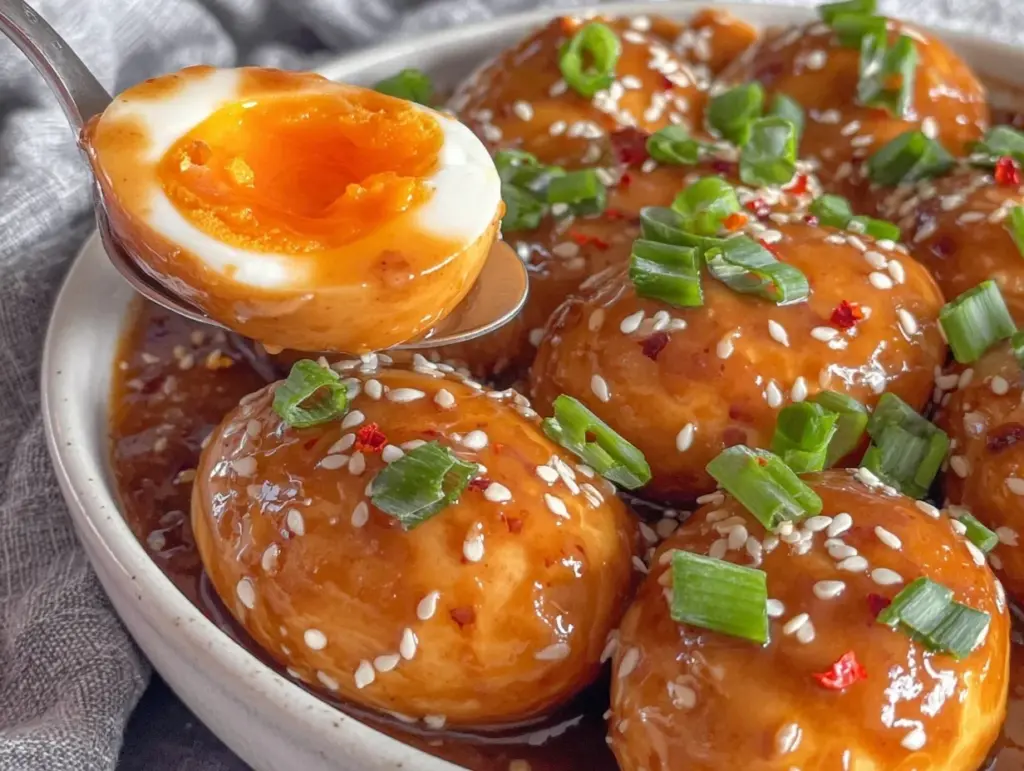
The first time I tasted spicy gochujang eggs appetizer, I was sitting at a tiny Korean street food stall in Seoul’s bustling Myeongdong market. The air was thick with the scent of sizzling skewers and sweet, spicy sauces, but the eggs—oh, those eggs!—were what really caught me off guard. Soft-boiled, slicked with a glossy, fiery gochujang glaze, and sprinkled with toasted sesame seeds, they were like a little bomb of comfort and heat all at once.
I’ve since recreated this spicy gochujang eggs appetizer countless times at home. Honestly, it’s become my go-to when I want a quick snack that’s bold, flavorful, and a tiny bit addictive. Plus, the recipe is surprisingly simple, no fancy ingredients or complicated steps, just a handful of pantry staples stirred together to make magic.
This Korean snack is perfect for anyone craving a little zing in their life without spending hours in the kitchen. Whether you want to impress friends with an easy appetizer or just need a spicy pick-me-up after a long day, these eggs deliver. I love how the creamy yolks mellow the punchy heat of the gochujang, creating a harmony that’s anything but ordinary. And let’s face it—who doesn’t love an appetizer that doubles as a protein-packed snack?
After refining the technique to get the yolks just right and balancing the sauce perfectly, I’m confident you’ll find this spicy gochujang eggs appetizer as irresistible as I do. Trust me, once you try it, it’s going to become one of those dishes you make on repeat, especially when paired with a cozy bowl of soup like the loaded potato soup for a full-on comforting meal.
Why You’ll Love This Recipe
- Quick & Easy: Ready in under 20 minutes, this spicy gochujang eggs appetizer is perfect when you need a fast snack or a last-minute party dish.
- Simple Ingredients: No exotic items required—just eggs, gochujang, and a few pantry staples you probably already have on hand.
- Perfect for Any Occasion: Whether it’s a casual get-together, a Korean-themed night, or just a solo snack, these eggs fit the bill.
- Crowd-Pleaser: The spicy-sweet flavor combo always gets nods of approval, even from those wary of heat.
- Unbelievably Delicious: The silky yolk with the fiery gochujang coating is a flavor sensation that keeps you coming back for more.
What sets this spicy gochujang eggs appetizer apart is the balance. Instead of overwhelming heat, the recipe tempers the chili paste with a touch of sweetness and acidity, plus a bit of toasted sesame oil for that nutty depth. The eggs themselves are softly boiled to the perfect creamy center, which honestly makes all the difference in texture and mouthfeel.
This isn’t just another spicy egg dish—it’s a snack that hits all the right notes, and I know because I’ve tested it multiple ways to get it just right. Plus, it’s a great way to sneak in protein and flavor, whether you’re vegan-curious or meat-averse.
Pairing these eggs with a warming bowl of creamy tomato soup makes for a meal that’s cozy yet exciting. Honestly, it’s the kind of simple dish that makes you pause and savor every bite.
What Ingredients You Will Need
This spicy gochujang eggs appetizer uses straightforward ingredients that come together for a bold punch without fuss. Most of these are pantry staples, and the gochujang paste is the star that brings the signature Korean heat and umami.
- Large eggs (6) – I prefer farm-fresh or organic for the best flavor and yolk color.
- Gochujang (2 tablespoons) – The fermented Korean chili paste that provides the heat and depth. I like Chung Jung One brand for its balanced flavor.
- Soy sauce (1 tablespoon) – Adds saltiness and umami.
- Honey or brown sugar (1 teaspoon) – Just a touch to balance the spice.
- Rice vinegar (1 teaspoon) – Brings acidity to brighten the sauce.
- Sesame oil (1 teaspoon) – For that toasty, nutty aroma that’s essential in Korean cooking.
- Garlic (1 small clove, minced) – Fresh garlic amps up the flavor without overpowering.
- Scallions (2-3, thinly sliced) – For garnish and fresh bite.
- Toasted sesame seeds (1 tablespoon) – Adds crunch and nuttiness.
- Optional chili flakes – If you want extra heat, sprinkle a pinch on top.
If you can’t find gochujang, a mix of chili paste and miso can work as a substitute, but honestly, the authentic flavor really shines with the real deal. For a gluten-free option, check that your soy sauce is tamari or another gluten-free brand.
Since this recipe is all about the sauce coating the eggs, quality matters—especially for gochujang and sesame oil. You don’t need to break the bank, but picking a trusted brand makes a difference I’ve learned the hard way from experimenting.
Equipment Needed
- Medium saucepan – to gently boil the eggs without cracking them.
- Slotted spoon – helps remove eggs from boiling water without damage.
- Small mixing bowl – for whisking together the gochujang sauce.
- Sharp knife – to peel and slice the eggs cleanly.
- Serving plate or small dish – presentation counts, especially for appetizers!
Nothing fancy here, really. If you don’t have a slotted spoon, a regular spoon works fine; just be careful when lifting the eggs out. For boiling, I like a pot with a lid to help bring water to boil faster, but it’s not mandatory. I’ve tried this with both electric and gas stoves, and the timing is pretty forgiving.
Preparation Method
- Boil the eggs: Place 6 large eggs in a medium saucepan and cover with cold water by about an inch (2.5 cm). Bring to a gentle boil over medium-high heat. Once boiling, reduce heat to low and simmer for exactly 7 minutes for soft-yolk eggs or 9 minutes for medium-yolk—adjust based on your preference.
- Cool the eggs: Immediately transfer eggs into a bowl of ice water to stop cooking. Let them chill for about 5 minutes. This step helps with easy peeling and perfect texture.
- Prepare the sauce: In a small bowl, whisk together 2 tablespoons gochujang, 1 tablespoon soy sauce, 1 teaspoon honey, 1 teaspoon rice vinegar, 1 teaspoon sesame oil, and 1 minced garlic clove. Taste and adjust sweetness or acidity if needed.
- Peel the eggs: Gently tap each egg on the counter and peel off the shell. Rinse under cool water to remove stray bits. Slice each egg in half lengthwise.
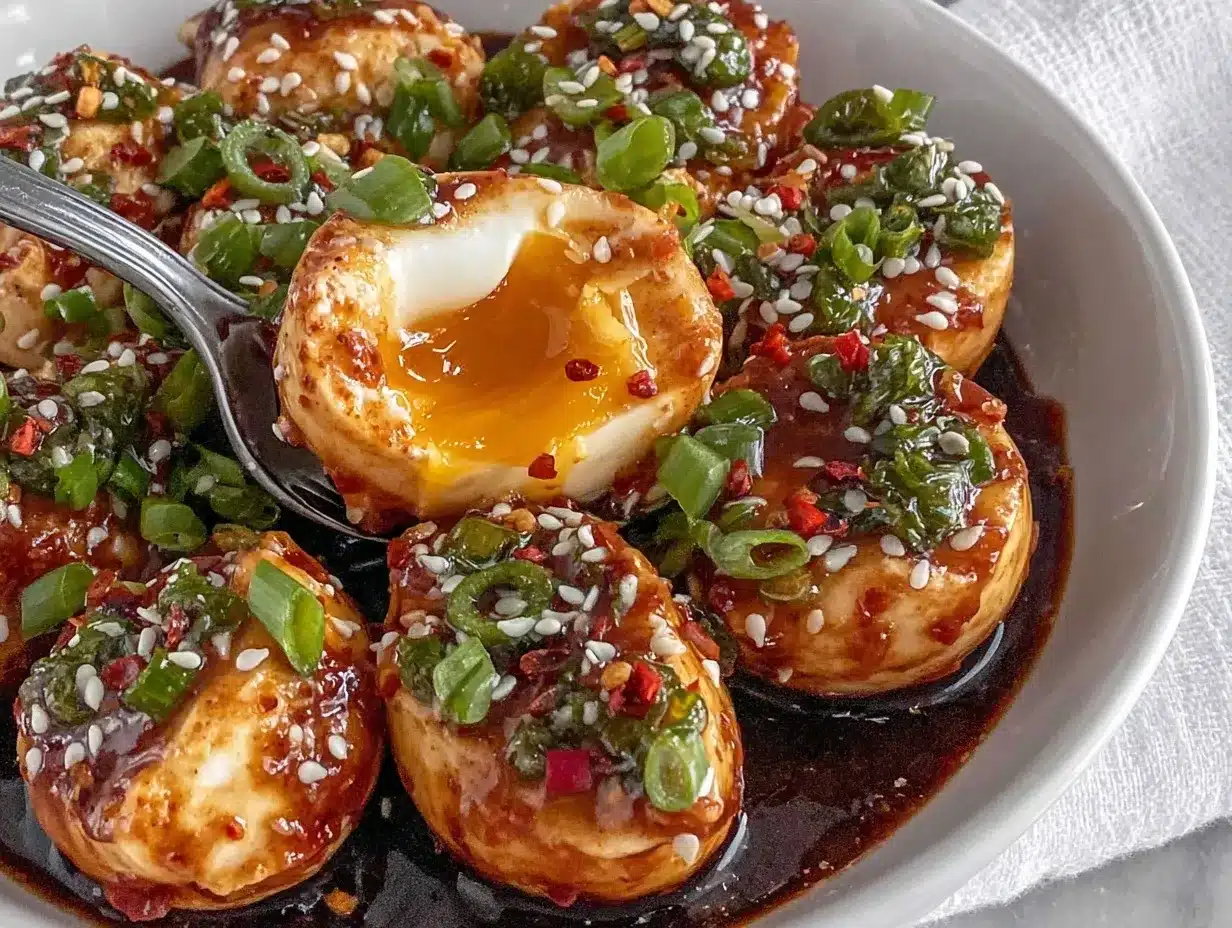
- Coat the eggs: Arrange the halved eggs on your serving plate. Using a spoon or pastry brush, generously coat the cut sides with the gochujang sauce. Let the sauce soak in for a minute or two.
- Garnish: Sprinkle toasted sesame seeds and thinly sliced scallions over the eggs. Add a pinch of chili flakes if you like it extra spicy.
- Serve immediately: These eggs are best served fresh but can be kept chilled for up to a day. For a full meal, pair with something like the creamy vegetable soup to balance the heat and round out flavors.
Pro tip: If the gochujang seems too thick, stir in a teaspoon of warm water to loosen it for easier coating. When boiling, fresh eggs are harder to peel, so older eggs (about a week old) work best.
Cooking Tips & Techniques
Getting the perfect soft-boiled egg can be tricky, but here’s what I’ve learned from plenty of trial and error. Timing is everything. I recommend using a timer and an ice bath to stop the cooking immediately. This keeps the yolk creamy and avoids that dreaded green ring around it.
When mixing the sauce, balance is key. Gochujang can be quite spicy and salty on its own, so adding honey and vinegar brings harmony. Taste as you go, because brands vary in strength.
Applying the sauce while the eggs are still slightly warm helps the flavors seep in better. I also like using a small brush rather than spooning it on—it gives a nice even coat without breaking the delicate whites.
Don’t skip the garnish! The sesame seeds add crunch and nuttiness, while scallions bring freshness and color. These little touches make the appetizer pop visually and flavor-wise.
Lastly, keep an eye on the eggs when boiling. If you’re multitasking, set a timer and don’t wander off. Overcooking results in dry yolks and a rubbery texture, which really kills the experience.
Variations & Adaptations
- Vegan-friendly: Swap the eggs for firm tofu cubes, lightly pan-fried, then tossed in the gochujang sauce for a plant-based spin.
- Milder version: Use half the gochujang and add a bit more honey to tame the heat for picky eaters or kids.
- Extra crunch: Sprinkle crushed roasted peanuts or fried shallots on top for a textural contrast.
- Smoky twist: Add a dash of smoked paprika or use smoked sesame oil instead of regular for a deeper flavor.
- Seasonal swap: In summer, try adding thin cucumber slices underneath the eggs for a refreshing crunch and cooling effect.
One of my favorite tweaks is stirring a little freshly grated ginger into the sauce for a zesty lift. It’s an easy way to brighten the dish and add complexity without stealing the spotlight from the gochujang.
Serving & Storage Suggestions
Serve this spicy gochujang eggs appetizer warm or at room temperature for the best flavor experience. The sauce tastes brightest when freshly applied, so don’t let the eggs sit too long after coating.
They make a fantastic finger food for parties or a spicy side for Korean meals. I often set them alongside steamed rice and kimchi or pair with a comforting bowl of creamy chicken pot pie to balance the heat.
If you have leftovers (rare as that is), store them covered in the fridge for up to 24 hours. Reheat gently in a microwave or serve cold—flavors will deepen but the texture changes slightly.
These eggs also hold up well chilled, making them a handy snack to prepare ahead for picnics or lunchboxes. Just add fresh scallions and sesame seeds before serving to keep their brightness.
Nutritional Information & Benefits
This spicy gochujang eggs appetizer is a protein-packed snack with healthy fats and minimal carbs, making it great for those watching their macros. Each serving (about 2 eggs) provides roughly 140 calories, 11 grams of protein, and 10 grams of fat.
Eggs offer essential nutrients like choline for brain health and vitamin D, while gochujang brings probiotics from fermentation and capsaicin for metabolism support. The sesame oil adds heart-healthy fats, and garlic contributes antioxidants.
Keep in mind soy sauce contains gluten unless you use tamari, so adjust accordingly if you have sensitivities. Overall, this snack is an energizing, flavorful choice that fits many dietary lifestyles.
Conclusion
Whether you’re craving a spicy snack, a quick appetizer, or a flavorful side, this spicy gochujang eggs appetizer hits the spot every time. It’s easy to make, packed with bold Korean flavors, and perfect for sharing or savoring solo.
I love how this recipe turned a humble boiled egg into something vibrant and exciting, without needing hours or obscure ingredients. It’s become a staple in my kitchen, especially when paired with cozy dishes like creamy tomato soup or hearty loaded potato soup. Honestly, it’s a small dish with big personality.
Feel free to tweak the heat level, garnish, and even the cooking method to make it your own. And do share your twists or questions below—I’d love to hear how you make it yours!
Happy cooking, and may your snack time always have that perfect spicy kick!
FAQs
- Can I use hard-boiled eggs instead of soft-boiled?
Yes, hard-boiled eggs work fine but the texture will be firmer and less creamy. Adjust boiling time to 10-12 minutes. - Where can I buy gochujang paste?
Most Asian grocery stores carry gochujang. You can also find it online or in the international aisle of larger supermarkets. - How spicy is this appetizer?
It has a moderate heat level, but you can adjust by adding more or less gochujang or chili flakes according to your taste. - Can I prepare the sauce ahead of time?
Absolutely! The sauce can be made a day ahead and stored in the fridge. Just stir well before using. - Is this recipe gluten-free?
It can be, if you use gluten-free soy sauce (like tamari) instead of regular soy sauce.
Pin This Recipe!
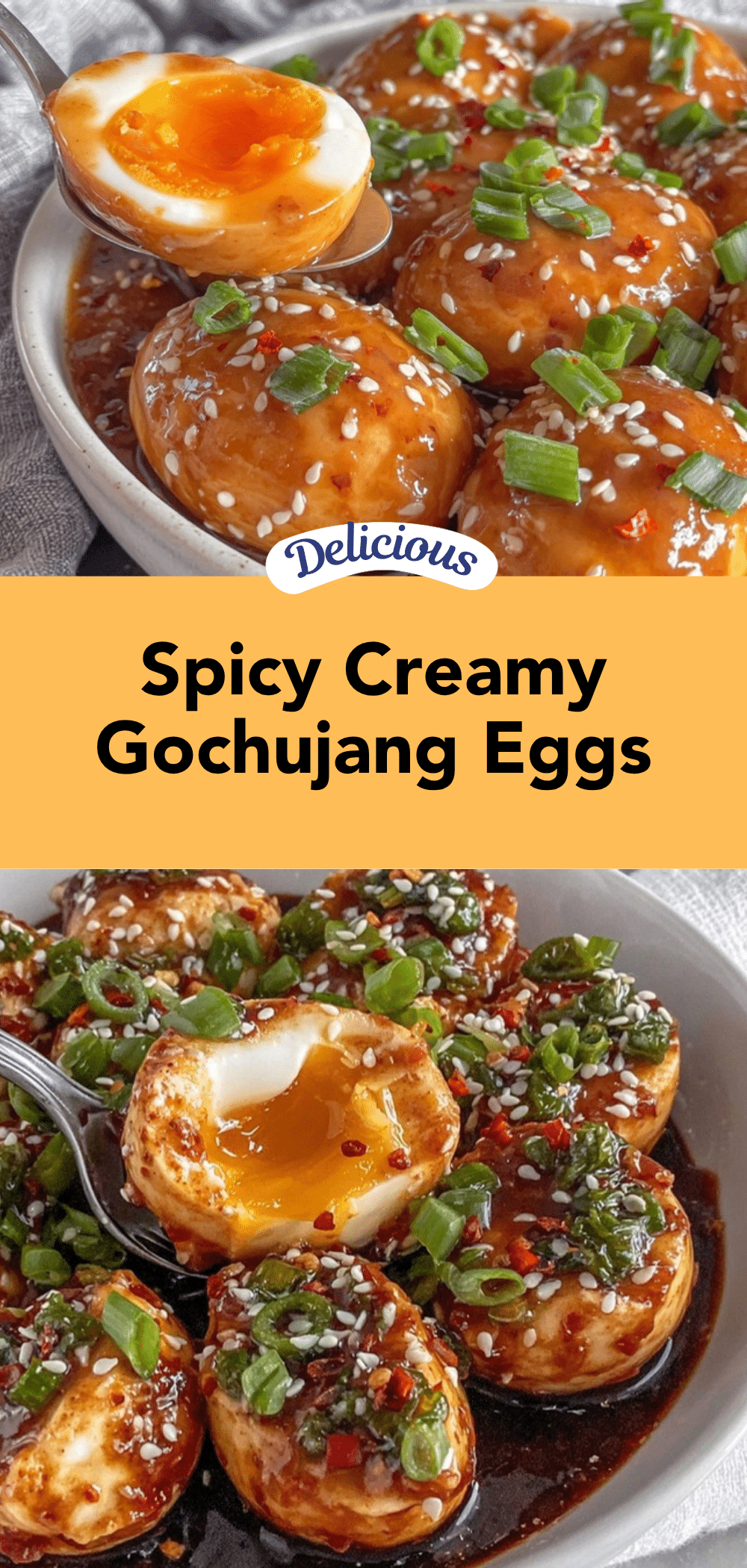
Spicy Gochujang Eggs Appetizer Recipe Easy Homemade Korean Snack

A quick and easy Korean snack featuring soft-boiled eggs coated in a spicy, sweet, and savory gochujang sauce, garnished with toasted sesame seeds and scallions.
- Prep Time: 10 minutes
- Cook Time: 10 minutes
- Total Time: 20 minutes
- Yield: 6 servings 1x
- Category: Appetizer
- Cuisine: Korean
Ingredients
- 6 large eggs
- 2 tablespoons gochujang (Korean chili paste)
- 1 tablespoon soy sauce
- 1 teaspoon honey or brown sugar
- 1 teaspoon rice vinegar
- 1 teaspoon sesame oil
- 1 small clove garlic, minced
- 2–3 scallions, thinly sliced
- 1 tablespoon toasted sesame seeds
- Optional chili flakes, for extra heat
Instructions
- Place 6 large eggs in a medium saucepan and cover with cold water by about an inch (2.5 cm). Bring to a gentle boil over medium-high heat.
- Once boiling, reduce heat to low and simmer for exactly 7 minutes for soft-yolk eggs or 9 minutes for medium-yolk eggs.
- Immediately transfer eggs into a bowl of ice water to stop cooking. Let chill for about 5 minutes.
- In a small bowl, whisk together 2 tablespoons gochujang, 1 tablespoon soy sauce, 1 teaspoon honey, 1 teaspoon rice vinegar, 1 teaspoon sesame oil, and 1 minced garlic clove. Adjust sweetness or acidity if needed.
- Gently tap each egg on the counter and peel off the shell. Rinse under cool water to remove stray bits. Slice each egg in half lengthwise.
- Arrange the halved eggs on a serving plate. Using a spoon or pastry brush, generously coat the cut sides with the gochujang sauce. Let the sauce soak in for a minute or two.
- Sprinkle toasted sesame seeds and thinly sliced scallions over the eggs. Add a pinch of chili flakes if desired.
- Serve immediately. Can be kept chilled for up to 24 hours.
Notes
Use older eggs (about a week old) for easier peeling. If gochujang is too thick, stir in a teaspoon of warm water to loosen. Apply sauce while eggs are slightly warm for better flavor absorption. Use tamari for gluten-free option. Sauce can be made ahead and stored in fridge.
Nutrition
- Serving Size: About 2 eggs per ser
- Calories: 140
- Sugar: 2
- Sodium: 450
- Fat: 10
- Saturated Fat: 2
- Carbohydrates: 4
- Fiber: 0.5
- Protein: 11
Keywords: spicy eggs, gochujang, Korean snack, appetizer, soft-boiled eggs, easy recipe, Korean appetizer, protein snack