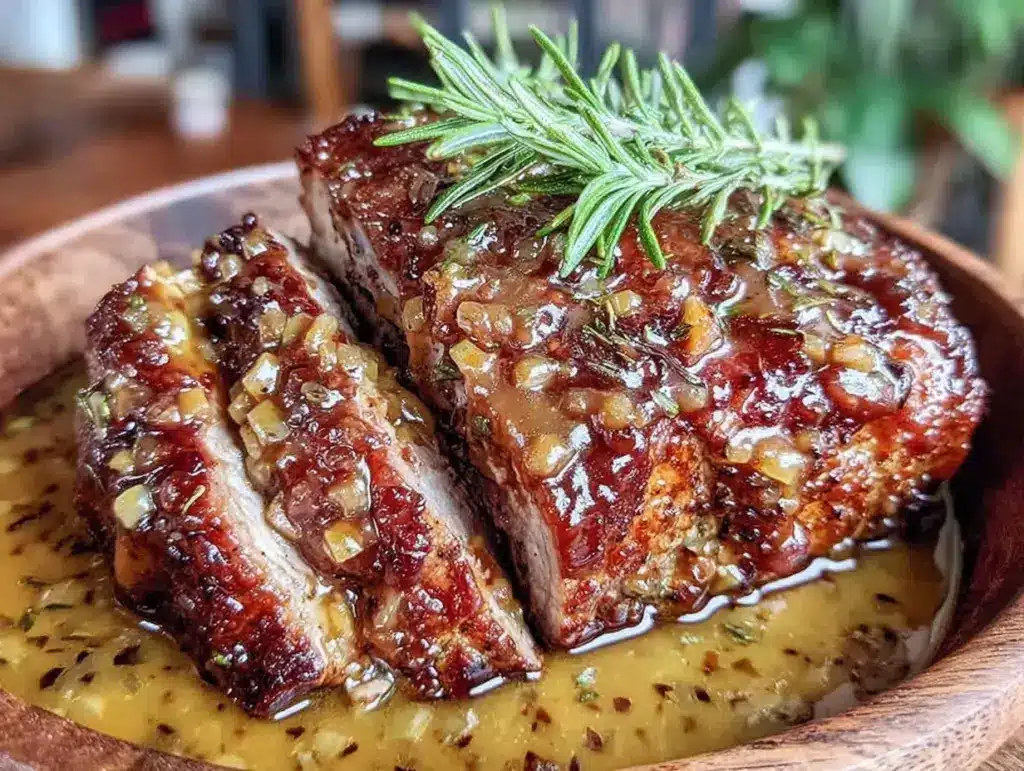
The aroma of a classic pork roast and gravy simmering in the oven has this uncanny way of pulling everyone into the kitchen — it’s like an invisible invite you just can’t refuse. I remember the first time I made this recipe; it was a chilly Sunday afternoon, and the smell of garlic and herbs roasting alongside juicy pork filled the house. Honestly, it felt like a warm hug after a long week. This recipe isn’t just about the meal — it’s about those moments when the kitchen becomes the heart of the home.
I stumbled upon this classic pork roast recipe from my grandmother’s worn-out cookbook, the one with handwritten notes in the margins. She always said the secret was in the slow roasting and the gravy that soaks into every bite. After making this recipe more times than I can count, tweaking it here and there, it’s become my go-to for family dinners and special occasions alike. If you’re searching for a hearty, comforting meal that’s surprisingly easy to pull together, this pork roast and gravy is it.
Whether you’re a busy parent needing a reliable dinner or someone who loves a good, soulful meal, this recipe will fit right into your routine. It’s savory, tender, and the gravy? Well, it’s downright addictive. Plus, it’s perfect for pairing with cozy sides like creamy mashed potatoes or even a bowl of loaded potato soup — which, by the way, is another favorite to keep on your recipe list for chilly nights.
Why You’ll Love This Classic Pork Roast and Gravy Recipe
After roasting pork dozens of times, I can honestly say this recipe strikes just the right balance between simplicity and rich flavor. Here’s what makes it stand out:
- Easy to Prepare: The prep takes under 20 minutes, and then your oven does all the work — making it perfect for busy evenings or a relaxed weekend dinner.
- Simple Ingredients: No need for fancy or hard-to-find items. You can find everything in your local grocery store or even your pantry.
- Perfect for Family Gatherings: Whether it’s a Sunday dinner or a holiday meal, this roast always earns compliments and second helpings.
- Juicy, Tender Meat: Thanks to the slow roasting and a well-seasoned rub, the pork stays moist and flavorful.
- Rich, Homemade Gravy: Made from the pan drippings, the gravy is the real star — silky, savory, and just what you want over potatoes or veggies.
This isn’t just any pork roast recipe; it’s the kind that fills your kitchen with nostalgic scents and leaves a lasting impression on everyone at the table. The technique of searing before roasting locks in juices, and the addition of fresh herbs gives it a classic, homey feel that’s hard to beat. And if you’re looking to round out your comfort food experience, a bowl of loaded potato soup alongside this roast makes for a truly comforting dinner combo.
What Ingredients You Will Need
This recipe calls for straightforward, wholesome ingredients that come together beautifully to create a roast that’s packed with flavor and perfect texture. Here’s what you’ll gather:
- Pork Shoulder Roast (4-5 lbs / 1.8-2.3 kg): This cut is ideal for roasting — it has enough fat to stay juicy but also tender once cooked.
- Olive Oil (2 tbsp): For searing the pork and adding a subtle richness.
- Garlic Cloves (4-5, minced): Garlic is a must — it infuses the roast with its aromatic punch.
- Fresh Rosemary (2 tbsp, chopped): Rosemary adds that classic piney note that pairs perfectly with pork.
- Fresh Thyme (1 tbsp, chopped): Thyme brings earthiness and depth.
- Salt and Black Pepper (to taste): Season generously to bring out all the flavors.
- Onion (1 large, sliced): Roasting the pork on a bed of onions adds natural sweetness to the drippings.
- Chicken or Vegetable Broth (1 cup / 240 ml): Used for making the gravy, adds moisture and flavor.
- All-Purpose Flour (2 tbsp): To thicken the gravy — can swap with gluten-free flour if needed.
- Butter (2 tbsp): Adds richness to the gravy.
When selecting the pork shoulder, look for a roast with a nice layer of fat on top — it renders down during cooking for juicy meat. I prefer using extra virgin olive oil from trusted brands like California Olive Ranch for a clean flavor. Feel free to swap fresh herbs with dried if that’s what you have on hand, just use about a third of the amount since dried herbs are more concentrated.
Equipment Needed
- Roasting Pan or Oven-Safe Skillet: A heavy-duty pan works best for even heat distribution and catching drippings.
- Sharp Knife: For trimming and scoring the pork.
- Meat Thermometer: Crucial for checking doneness without cutting into the roast.
- Mixing Bowl: For combining herbs, garlic, and oil for the rub.
- Whisk: Handy for making smooth gravy.
- Cutting Board: For prepping ingredients.
If you don’t have a roasting pan, a sturdy cast-iron skillet or even a baking dish with a rack works just fine. For those new to roasting, a simple digital meat thermometer will save you a lot of guesswork — I’ve learned the hard way that relying on time alone can lead to dry meat.
Preparation Method
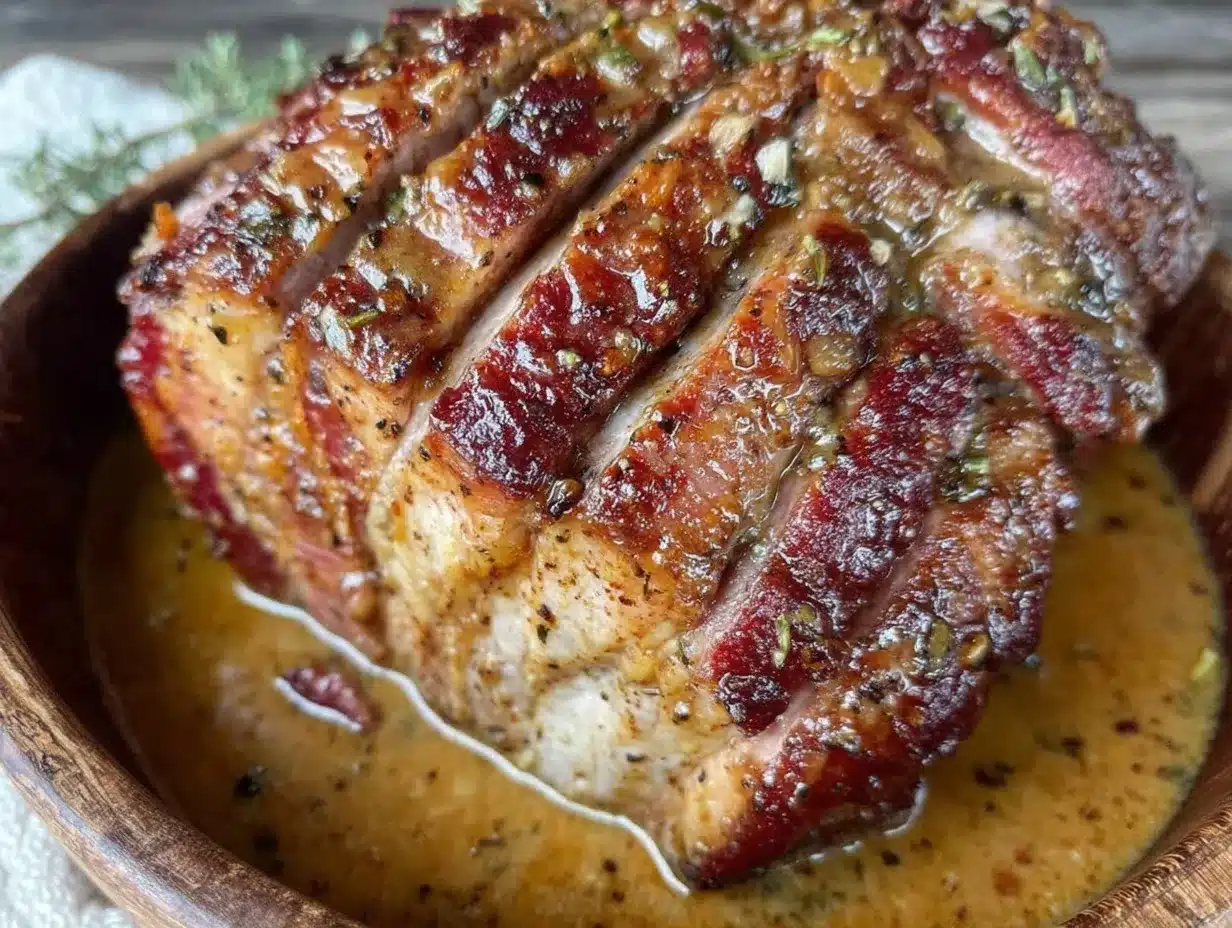
- Preheat your oven to 325°F (165°C). This moderate temperature allows the pork to cook low and slow, keeping it tender.
- Prepare the pork roast: Pat the pork shoulder dry with paper towels to ensure a good sear. Score the fat layer lightly in a crisscross pattern to help render the fat.
- Make the herb rub: In a bowl, combine olive oil, minced garlic, chopped rosemary, thyme, salt (about 2 tsp), and freshly ground black pepper (1 tsp). Mix well.
- Rub the mixture all over the pork: Massage the herb rub into the pork, making sure every nook and cranny is coated. Let it sit at room temperature for 15-20 minutes — this helps the flavors sink in.
- Sear the pork: Heat a tablespoon of olive oil in your roasting pan over medium-high heat. Place the pork fat-side down and sear until golden brown, about 5 minutes. Flip and sear the other sides for 3-4 minutes each. This step locks in juices and builds flavor.
- Add sliced onions to the pan: Spread the onion slices around the pork to roast alongside it. They’ll caramelize and add sweetness to your gravy later.
- Roast the pork: Transfer the pan to the oven. Roast uncovered for about 3 to 3.5 hours, or until the internal temperature reaches 190°F (88°C) for tender, pull-apart meat. Baste every hour with pan juices to keep it moist.
- Rest the meat: Once done, remove the pork from the oven and tent with foil. Let it rest for 20 minutes — trust me, this step keeps the juices locked in.
- Make the gravy: Pour the pan drippings into a saucepan, skim off excess fat, then melt butter in the pan. Whisk in flour and cook for 2 minutes until golden, then gradually add broth while whisking. Simmer until thickened, about 5 minutes. Season with salt and pepper to taste.
- Slice and serve: Carve the pork and serve with generous spoonfuls of the homemade gravy.
If the roast starts to brown too quickly, tent it with foil during cooking. Also, keep an eye on the pan liquid — if it dries up, add a splash of broth or water to prevent burning. The aroma at the 2-hour mark is always a sign your hard work is paying off!
Cooking Tips & Techniques for Perfect Pork Roast and Gravy
Roasting pork might seem straightforward, but a few tricks can make all the difference:
- Don’t skip the sear: It’s tempting to toss it straight in the oven, but searing the roast first locks in moisture and creates that golden crust everyone loves.
- Use a meat thermometer: Pork can dry out fast if overcooked. Aim for 190°F (88°C) when you want that tender, pull-apart texture.
- Resting is crucial: Always let the roast rest before slicing. Cutting too soon lets all those flavorful juices run out.
- Baste regularly: Spoon pan juices over the roast during cooking to keep it moist and tasty.
- Gravy from drippings: Don’t waste those pan drippings! They’re packed with flavor and make the best gravy when combined with broth and thickened with flour.
I once tried skipping the basting step and ended up with a slightly dry roast — lesson learned. Also, when making the gravy, whisk constantly to avoid lumps. If the gravy gets too thick, a splash of broth or water can loosen it up without losing taste. Timing your sides to finish just as the roast rests is a bit of an art — multitasking is your friend here!
Variations & Adaptations
This classic recipe is a blank canvas for flavor and dietary needs:
- Herb Variations: Swap rosemary and thyme for sage and oregano for a more Mediterranean twist.
- Spicy Kick: Add a teaspoon of smoked paprika or cayenne pepper to the rub for a subtle heat.
- Gluten-Free Gravy: Use cornstarch or arrowroot powder instead of flour for thickening.
- Slow Cooker Adaptation: After searing, transfer the pork and onions to a slow cooker. Cook on low for 8 hours, then make the gravy with the collected juices.
- Sweet & Savory: Add apple slices to the roasting pan for natural sweetness that pairs wonderfully with pork.
One time, I added a splash of apple cider vinegar to the gravy, and it gave a lovely tang that balanced the richness perfectly. Feel free to experiment — that’s part of the fun!
Serving & Storage Suggestions
Serve your pork roast warm with the luscious gravy drizzled on top. It pairs wonderfully with creamy mashed potatoes or roasted vegetables. If you want a comforting meal, the pork roast alongside a bowl of creamy vegetable soup is a match made in heaven.
For storage, wrap leftover pork tightly in foil or an airtight container and refrigerate for up to 4 days. The gravy can be stored separately in a jar or container. Reheat gently on the stovetop or in the microwave, adding a splash of broth or water to loosen the gravy if needed. Leftover pork makes fantastic sandwiches or can be chopped into a quick stir-fry.
Over time, the flavors deepen, so if you have leftovers, let them sit overnight before reheating for an even tastier meal the next day.
Nutritional Information & Benefits
This classic pork roast and gravy recipe offers a well-rounded meal rich in protein and essential nutrients. A 4-ounce (113g) serving of pork shoulder provides about 280 calories, 22g of protein, and 20g of fat.
Pork is a great source of B vitamins, especially B12, which supports energy and brain health. The fresh herbs add antioxidants, and making gravy from scratch means you avoid the preservatives found in store-bought sauces.
If you’re watching carbs, this recipe is naturally low-carb, especially if you skip the gravy thickened with flour or use a gluten-free alternative. Just watch the salt if you’re on a sodium-restricted diet.
Conclusion
Honestly, this classic pork roast and gravy recipe is one of those dishes that feels like home on a plate. It’s straightforward to make, packed with comforting flavors, and perfect for any occasion that calls for a hearty meal. I love how easy it is to customize with different herbs or cooking methods, making it truly your own.
Try it out, tweak the seasoning, and see what works best for you and your family. And hey, if you give it a shot, I’d love to hear how it turns out — comments and recipe twists are always welcome!
Here’s to many cozy dinners filled with delicious food and good company.
Frequently Asked Questions About Classic Pork Roast and Gravy
How long should I roast pork shoulder for the best tenderness?
Roast at 325°F (165°C) for about 3 to 3.5 hours, or until the internal temperature reaches 190°F (88°C) for tender, pull-apart meat.
Can I use a different cut of pork for this recipe?
Pork shoulder is ideal due to its fat content and tenderness when slow-roasted. You could try pork loin, but it cooks faster and is leaner, so watch the time closely.
How do I make the gravy if I don’t want to use flour?
Use cornstarch or arrowroot as a gluten-free thickener. Mix with a little cold broth before whisking into the pan juices to avoid lumps.
Is it necessary to sear the pork before roasting?
While not mandatory, searing locks in juices and creates a flavorful crust, making a big difference in taste and texture.
Can I prepare this pork roast in a slow cooker?
Yes! After searing, place the pork and onions in a slow cooker and cook on low for 8 hours. Use the drippings for gravy afterward.
Pin This Recipe!
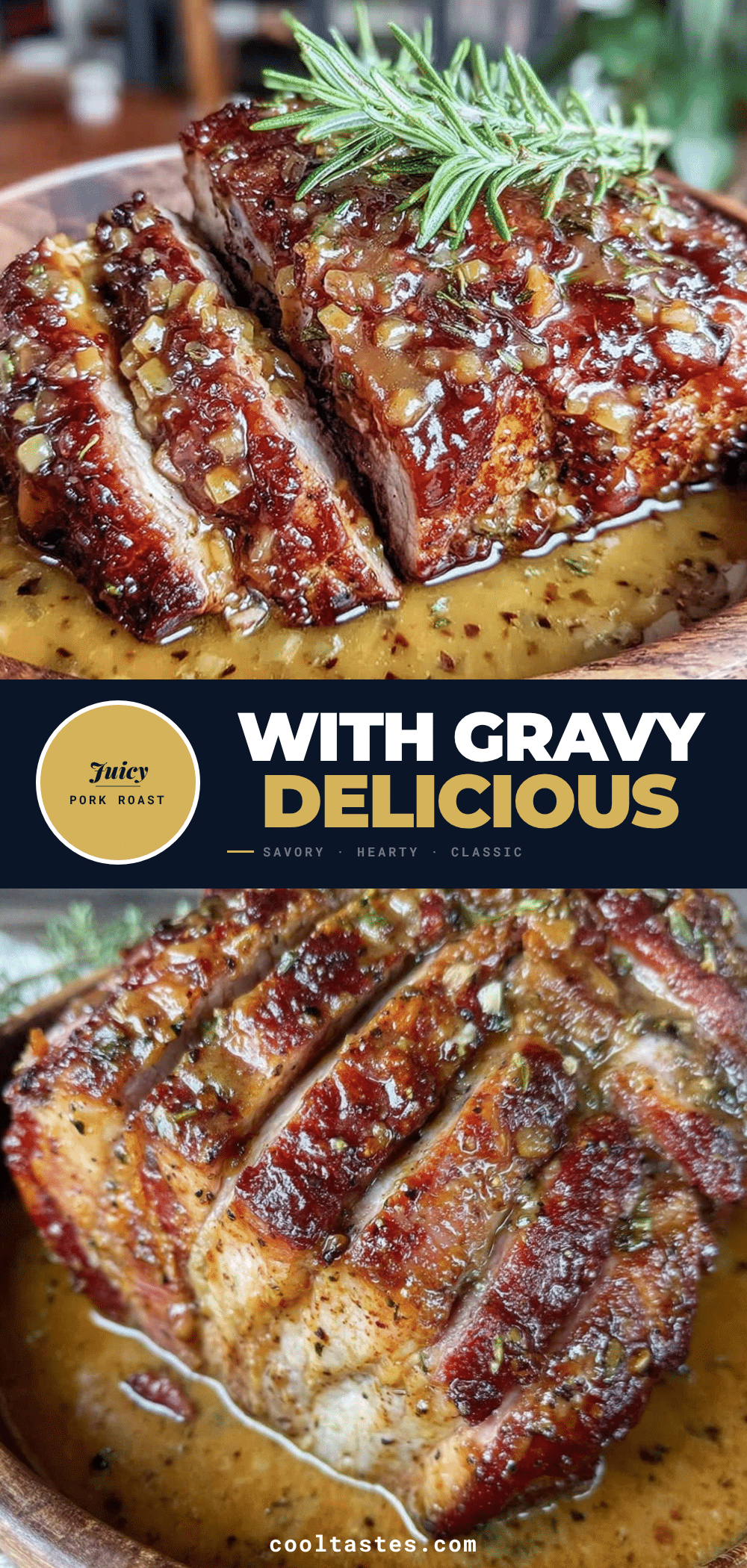
Classic Pork Roast and Gravy Recipe

A hearty and comforting pork shoulder roast slow-cooked to tender perfection with a rich homemade gravy made from pan drippings. Perfect for family dinners and special occasions.
- Prep Time: 20 minutes
- Cook Time: 3 hours 30 minutes
- Total Time: 3 hours 50 minutes
- Yield: 8 servings 1x
- Category: Main Course
- Cuisine: American
Ingredients
- 4–5 lbs (1.8–2.3 kg) pork shoulder roast
- 2 tbsp olive oil
- 4–5 garlic cloves, minced
- 2 tbsp fresh rosemary, chopped
- 1 tbsp fresh thyme, chopped
- Salt to taste (about 2 tsp)
- Black pepper to taste (about 1 tsp)
- 1 large onion, sliced
- 1 cup (240 ml) chicken or vegetable broth
- 2 tbsp all-purpose flour (or gluten-free flour alternative)
- 2 tbsp butter
Instructions
- Preheat your oven to 325°F (165°C).
- Pat the pork shoulder dry with paper towels. Score the fat layer lightly in a crisscross pattern.
- In a mixing bowl, combine olive oil, minced garlic, chopped rosemary, thyme, salt, and black pepper. Mix well.
- Rub the herb mixture all over the pork, coating thoroughly. Let sit at room temperature for 15-20 minutes.
- Heat 1 tablespoon olive oil in a roasting pan over medium-high heat. Sear the pork fat-side down until golden brown, about 5 minutes. Flip and sear other sides for 3-4 minutes each.
- Add sliced onions around the pork in the pan.
- Roast uncovered in the oven for 3 to 3.5 hours, or until internal temperature reaches 190°F (88°C), basting every hour with pan juices.
- Remove pork from oven and tent with foil. Let rest for 20 minutes.
- Pour pan drippings into a saucepan, skim off excess fat. Melt butter in the pan, whisk in flour and cook for 2 minutes until golden.
- Gradually whisk in broth and simmer until thickened, about 5 minutes. Season gravy with salt and pepper to taste.
- Slice the pork and serve with the homemade gravy.
Notes
Searing the pork before roasting locks in juices and creates a flavorful crust. Use a meat thermometer to ensure perfect doneness at 190°F (88°C). Baste the roast every hour to keep it moist. If gravy thickens too much, add a splash of broth or water to loosen it. Rest the meat for 20 minutes before slicing to retain juices. For gluten-free gravy, substitute flour with cornstarch or arrowroot powder.
Nutrition
- Serving Size: 4 oz (113 g) cooked
- Calories: 280
- Sugar: 1
- Sodium: 350
- Fat: 20
- Saturated Fat: 7
- Carbohydrates: 3
- Protein: 22
Keywords: pork roast, pork shoulder, homemade gravy, slow roasted pork, family dinner, comfort food, classic pork recipe